
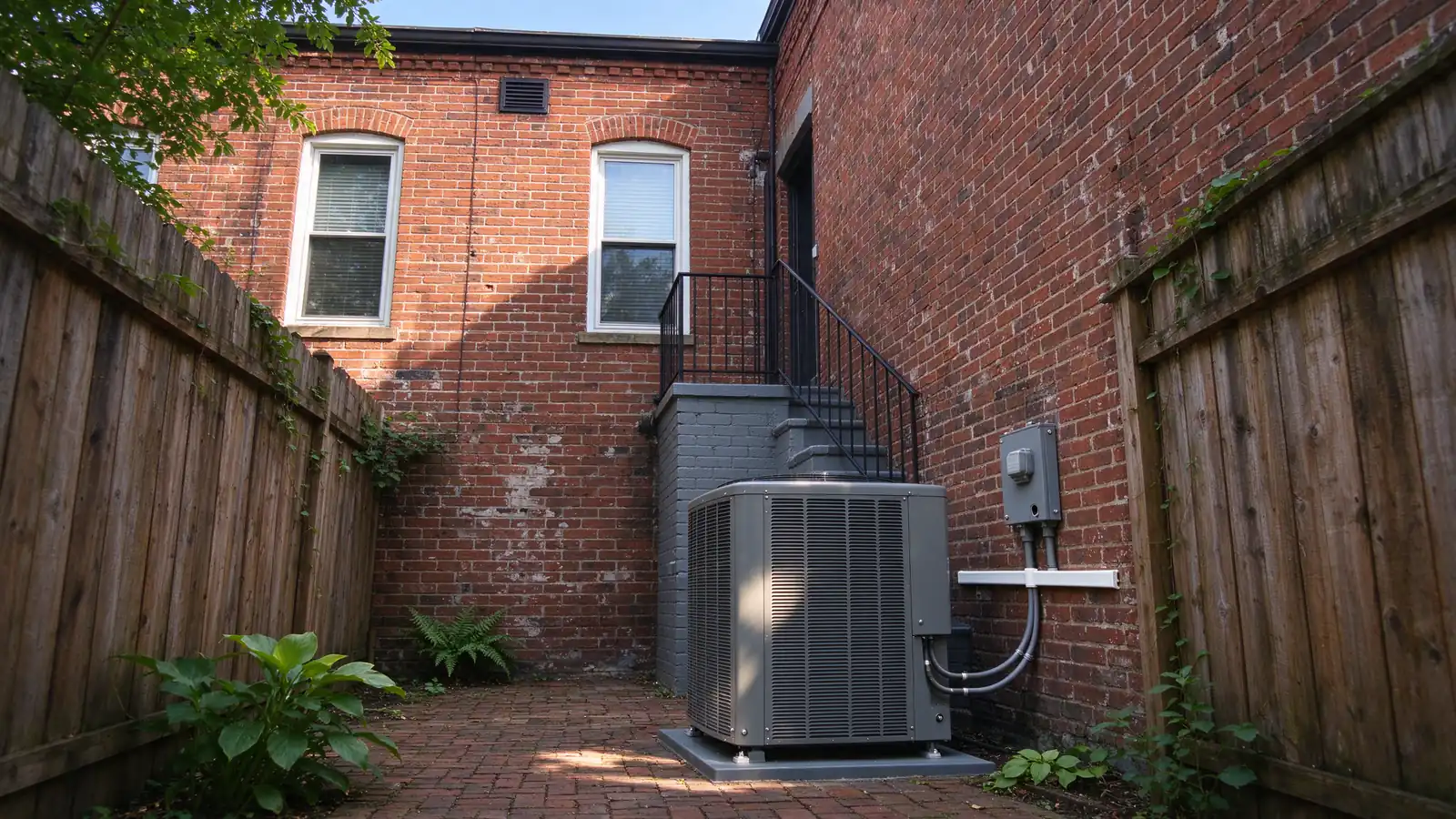
If your heat pump is old, loud or keeps needing repairs, we start with why it disappoints you before we pick the replacement. At Perennial DC Heat Pumps we replace ducted heat pumps across Washington, DC, and our typical range for one whole-home ducted replacement is $8,000 to $18,000 before rebates; your written estimate after the site visit sets the price. Buying the same size again keeps a cold upstairs bedroom cold when the real cause was a duct or a sizing mistake.
Repair it again, or replace it?
You are usually weighing a repair bill against a new system. We look at the diagnosed fault, how often the system has failed, and whether it still suits your house. A failed capacitor on a sound unit is a repair. A failed compressor on a system that uses a phased-out refrigerant is a different call.
Age alone proves nothing, so we don’t use it to push you toward replacement. A repair quote fixes one fault; our replacement estimate explains everything we keep and why. Weigh parts availability on each side, and how much uncertainty each choice leaves you with, as well as the price. We handle replacements, not repair calls, so if a repair is the sensible answer we tell you so.
What your current system tells us
Before the visit, photograph the nameplates on the indoor and outdoor units from the outside and dig out any service paperwork. The model numbers tell us the capacity, refrigerant and age; the paperwork shows what has already failed. Add a short note of the rooms that run hot or cold. Never take off access panels to find a label.
Your house matters as much as the equipment. A third-floor addition, a finished basement or new windows since the last install all change the load. A cabinet in a narrow rowhouse closet may not take a modern air handler, which is often taller or deeper than the old one. An outdoor unit squeezed behind a back fence may not have the service space a new model needs. Our survey preparation guide lists what to gather safely.
Will the new outdoor unit work with what’s inside?
We match the outdoor unit, indoor coil or air handler, metering device and controls as one combination the manufacturer approves and AHRI lists. Brand alone is not a match: two models from the same maker can use different refrigerants and pressures. We only keep your indoor coil when we can document it is compatible.
Refrigerant drives most of these calls. New equipment uses lower-GWP refrigerants that run at different pressures from the R-22 and R-410A systems in many DC homes, so an old coil often has to go.
Whether we reuse your line set depends on the new unit’s sizing tables, the run length and vertical lift, and how the lines hold up after we flush and pressure test them. If any of those fail, we run new lines. Our refrigerant guide covers both decisions, and the AHRI certificate for your matched pair goes into the DCSEU rebate file.
Why new equipment alone may not fix a hot upstairs room
A new variable-speed blower pushes against the same ducts the old one did. If static pressure is already high from an undersized return or a choking filter, the new blower ramps up, gets louder and still starves the far rooms. We measure static pressure before we choose equipment so we know whether your ducts can carry the airflow. Room complaints go into our load and sizing work before we pick a model.
Controls and power are part of the match. A thermostat that switched a single-stage heat pump may not run a communicating inverter system. Electric strip backup can need its own large circuit, and a spare breaker slot does not prove your panel has room. If you need new circuits, we line up the DOB electrical permit; the electrical guide explains the load calculation.
Ready to define the work for your property?
Get a heat pump replacement estimateWhat’s in our replacement estimate
Our written estimate lists removal of the old system and refrigerant recovery, the new pad or wall bracket, refrigerant piping, condensate drainage, power and control wiring, startup and testing, and the permits. In DC a heat pump replacement needs a DOB mechanical or refrigeration permit, and we file it before work starts: the Class E refrigeration permit for 0 to 120,000 BTU/h is $46 plus a 10% surcharge, or $50.60, and the instant mechanical permit up to 10 tons is also $50.60.
Those are the city’s fees; our time to file is part of the price.
The scope grows when ducts need rebuilding, your electrical service needs a heavy-up, the cabinet won’t make it up the stair, or a new outdoor spot triggers historic or public-space review. Air-handler replacement and ductwork changes each bring their own questions, even inside one project.
Same layout, or time for a redesign?
A like-for-like replacement keeps your layout and changes the matched equipment. A redesign revisits capacity, ducts, controls or placement because your house changed or the first design was wrong. What decides it is whether the parts we keep can meet the new system’s needs.
We keep your ducts when measured static pressure and room airflow suit the new selection. Repeating the old layout makes little sense after a renovation added rooms with no new supply or return. A cold-climate model raises output at DC’s 14°F design temperature, but it cannot fix a missing return path. We hold every option to the same comfort target and tell you the tradeoff each one accepts.
What it costs and which rebates apply
Our typical range of $8,000 to $18,000 assumes one whole-home ducted system, standard materials and normal access. Major duct changes, electrical service upgrades, roof work and historic-review complications sit outside it, and we price them from the site visit in your written estimate. Our cost guide shows what sits inside the range and what moves it.
DCSEU’s current tiers for a ducted heat pump replacing electric heat are $1,000 for ENERGY STAR equipment and $1,500 for ENERGY STAR Most Efficient. Both are reimbursements paid after installation.
DCSEU’s rules require a DC-licensed contractor and a DC Master Refrigeration and Air Conditioning mechanic, the DOB mechanical permit, the AHRI certificate, a paid itemized invoice, model and serial numbers, and the distributor invoice, submitted within 30 days of installation. If you keep a gas furnace, the job is not a conversion, so we don’t budget it at the gas tiers. Our DC rebates guide walks through the paperwork. Confirm current amounts on dcseu.com, and run the gross price through our cost estimator.
What you get when the job is done
Startup should leave you with numbers, not just a running unit: measured airflow or static pressure, charge verification by the manufacturer’s method, a condensate drain test, the thermostat setup and the backup heat lockout setting. If an item can only be checked in a different season, your estimate names when that check happens.
Keep the manuals, model and serial numbers and the manufacturer’s registration together, because the same records feed the DCSEU application. Our winter operation guide explains how defrost and auxiliary heat show up on the thermostat. To talk through a replacement, request an estimate and tell us your current system and what you want to change.
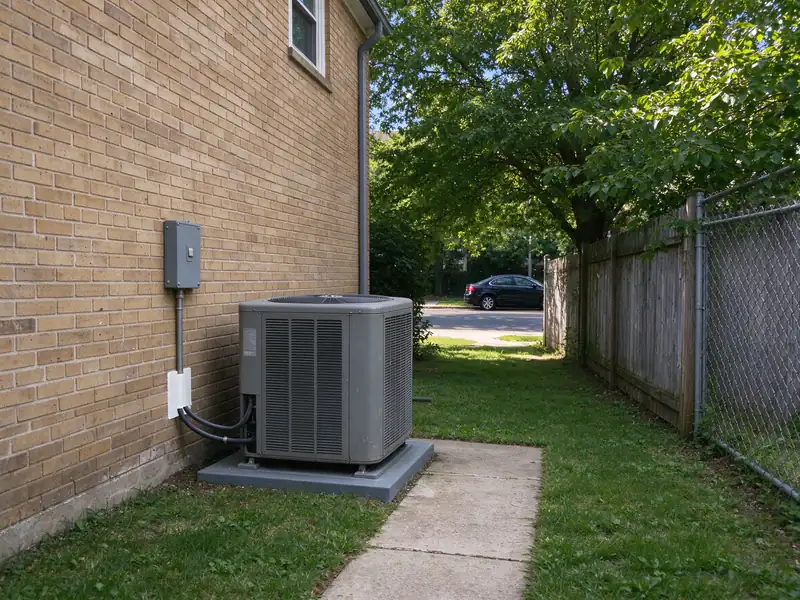
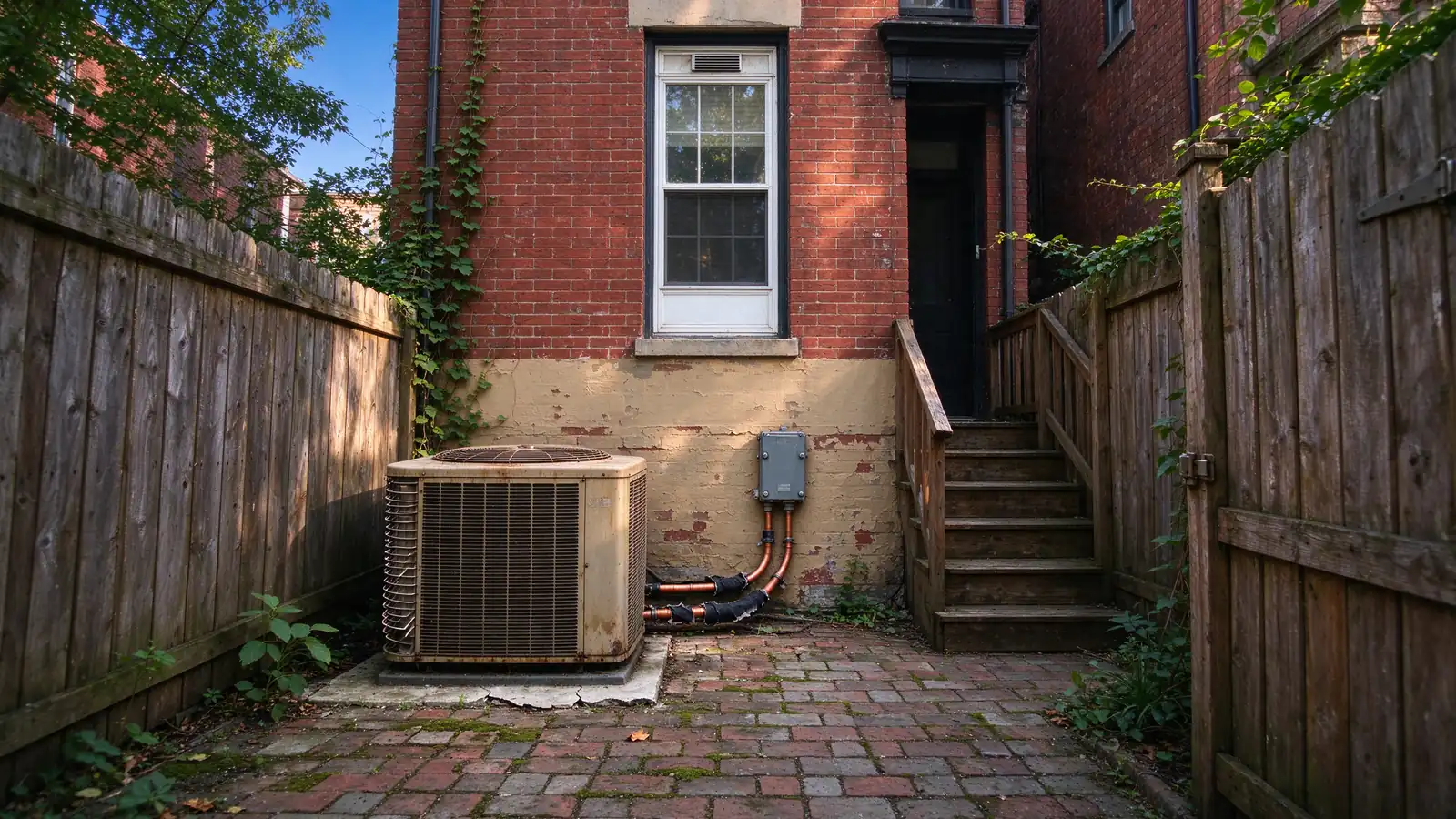
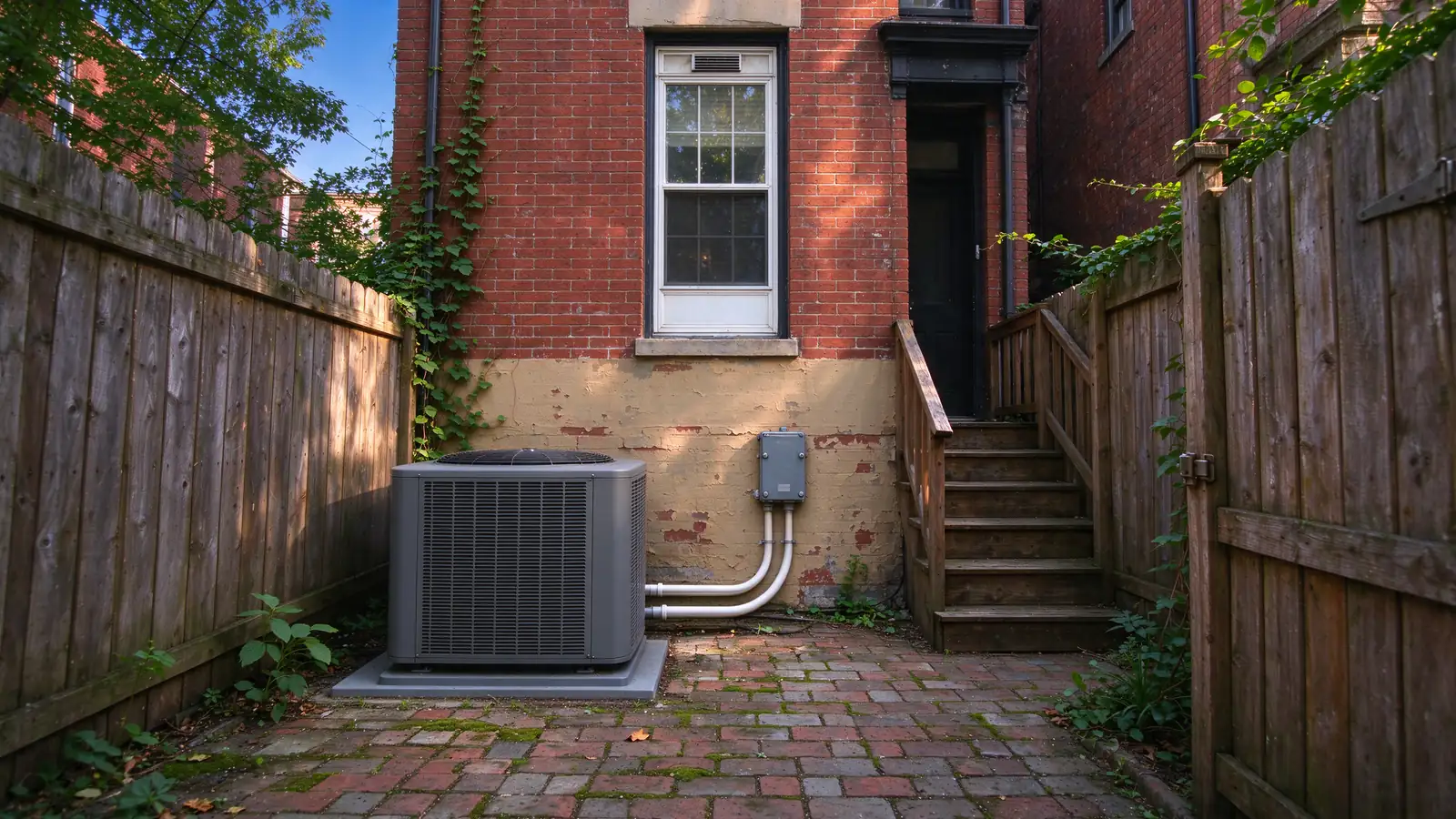
What this work looks like
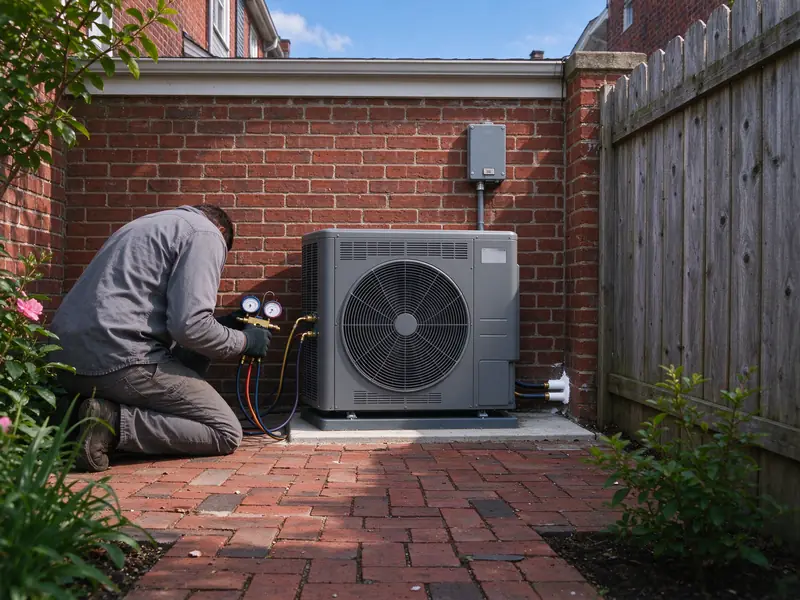
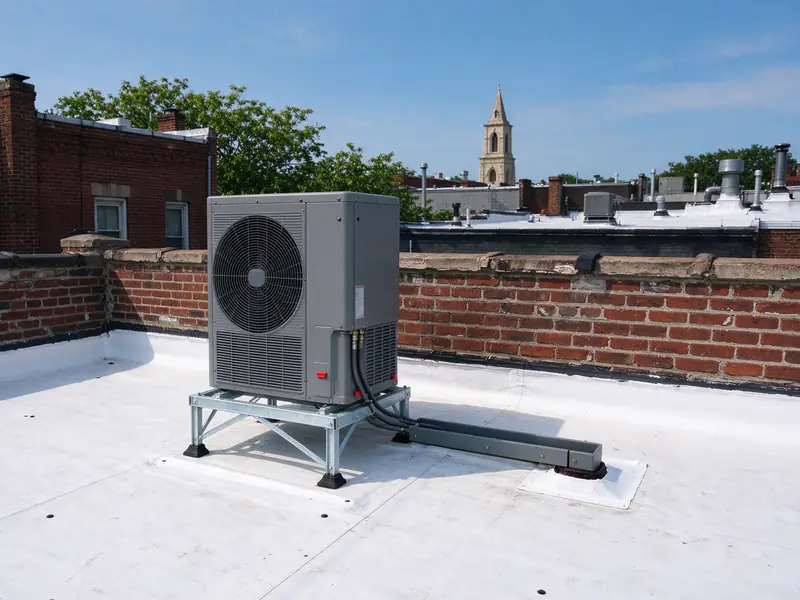
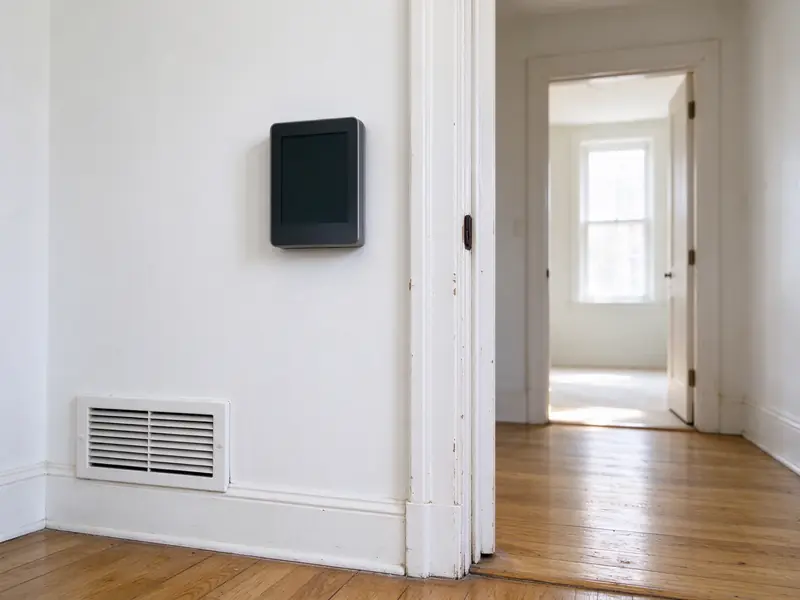
Questions before you decide
Can just the outdoor heat pump be replaced?
Only when we can document that your indoor coil is compatible with the new outdoor unit's refrigerant and controls. Newer refrigerants run at different pressures from R-22 and R-410A, so many outdoor-only swaps need a new coil too.
Does old equipment automatically need replacement?
No. Age starts the conversation; the diagnosed fault, the repair cost, parts availability and how well the system suits your house decide it.
What does a matched replacement system mean?
Your outdoor unit, indoor coil or air handler and controls are approved to run together and listed as a rated combination on an AHRI certificate. We include that certificate because DCSEU asks for it with a rebate application.
Can a replacement reuse the existing refrigerant lines?
Sometimes. We check that the line sizes appear in the new unit's tables for your run length and lift, then flush and pressure test them. If they fail, new lines go into your estimate.
Will new equipment fix an uncomfortable upstairs room?
Only if the equipment was the cause. Upstairs rooms in DC rowhouses usually suffer from long supply runs, weak returns and roof heat, so we measure those before we promise a new outdoor unit will help.
How does a shared condo system change replacement scope?
Your building may have to authorize the work, and a water-loop or other central system is not an ordinary air-source replacement, so we tell you early if yours is one. Individual condo units in larger buildings can still qualify for DCSEU rebates.
What should be included in a replacement proposal?
Our written estimate lists the model combination, how we sized it, what stays, removal and refrigerant recovery, piping, drainage, power, controls, the DOB permit, testing and exclusions. A lower total elsewhere often leaves one of these out.
Which startup records should I receive?
You get model and serial numbers, airflow or static pressure readings, charge verification, control settings and operating notes. Those records also support a DCSEU application, which is due within 30 days of installation.
Can the old thermostat stay with a replacement?
Only if it supports your new system's staging or communication and backup logic. A basic thermostat on an inverter system can lock out variable-speed operation, so we check it before we plan to keep it.
How should I compare replacement and repair proposals?
Put the documented fault and repair price beside the replacement's full scope, including what it keeps. Count the comfort problems you live with now, but not a guessed future failure as if it were certain.